

In today’s article, Bluefocus will provide you with insights into dropshipping business and the pros and cons of this model. In reality, the dropshipping business model is becoming increasingly popular with limitless potential. By leveraging its advantages and addressing its drawbacks, your business can achieve success.
Let’s dive in and learn more!
What is Dropshipping Business?
Simply put, dropshipping is a business model where the seller operates their online store without handling inventory, storage, packaging, or shipping. These tasks are managed by the supplier. The seller’s primary role is to implement marketing strategies and attract buyers.
Here’s how the dropshipping business model works:
- You, the seller, register with a product supplier, who can be based anywhere in the world.
- Customers place orders on your online store, and the order details (including product information, pricing, and customer address) are automatically transferred to the supplier’s system.
- The supplier then manufactures, packs, and ships the product directly to the customer based on the order information.
- Once the order is paid for, the revenue recorded in the system is divided between the seller and the supplier according to the agreement between the two parties.
More: The Concept Of Dropshipping | The Most Effective Mastery Method For Dropship In 2024.
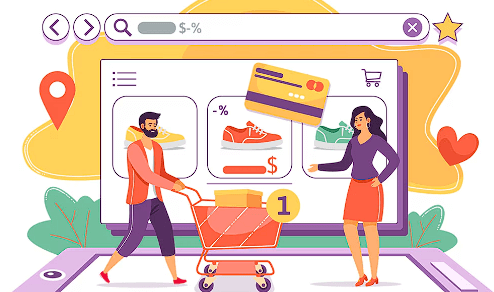
Let’s explore the pros and cons of running a dropshipping business
Pros of Dropshipping
- No Need to Manage Inventory: When you run a dropshipping business, you don’t have to handle inventory, imports, or shipping. These tasks are managed by the supplier, allowing you to focus solely on finding suppliers, building sales channels, and marketing.
- Low Initial Business Budget: Currently, dropshipping is a popular choice for many businesses. Unlike traditional businesses, the dropshipping model does not require upfront investment in inventory. Therefore, your initial costs are primarily for building sales channels, marketing, and advertising.
- Low Business Risk: As mentioned above, you don’t need to purchase inventory in advance, so you won’t lose money on unsold products or have tied-up capital.
- Flexibility: Since this is an online business model, you can operate your store anytime, anywhere. All you need is a laptop/tablet and a strong internet connection.
- Wide Range of Product Choices: Dropshipping allows you to sell any product that aligns with your research and passion.
Cons of Dropshipping
In addition to the advantages mentioned above, dropshipping also has some inherent limitations:
- Heavy Dependence on Suppliers: When suppliers handle shipping and logistics, your business heavily depends on their performance in managing shipments, inventory, and product quality. Therefore, any supply chain issues can significantly impact your business operations.
- High Competition: Since dropshipping requires minimal capital and investment, it’s easy to enter but also highly competitive. Without unique products or a distinct sales strategy, standing out among many sellers can be challenging.
- Risk of Selling Non-Exclusive Products: As dropshipping becomes more popular, product exclusivity can be short-lived. This makes it harder to differentiate your business and increases the risk of failure.
- On the other hand, while dropshipping offers exciting opportunities, it’s crucial to carefully consider both the pros and cons before starting this business model.
Challenges in Dropshipping
Misconception about the Ease of Dropshipping
Many people mistakenly believe that dropshipping is a simple and easy business model to pursue. This perception is extremely misleading. In reality, dropshipping is highly competitive, and generating sustainable revenue requires thorough market and product research, business acumen, and investment in effective advertising strategies.
Without these critical elements, your efforts may be futile. Therefore, if you truly want to run a successful dropshipping business, it’s essential to approach it with seriousness, dedication, and a willingness to learn and continuously improve.
Lack of Market and Product Research
One common mistake new dropshippers make is not researching the market and products thoroughly. Choosing outdated, unsuitable, or low-quality products can significantly impact your business. If your products don’t provide value to customers, it will be challenging to build a loyal customer base and attract new customers.
Selling Too Many Products Haphazardly
Offering a wide range of products to cater to various customer preferences can backfire. This approach can lead to divided focus across multiple products and customer segments, negatively impacting the customer experience for any particular group.
Therefore, it’s better to focus on one or a few related product categories. Conduct market research, understand the products, and identify potential customers to develop the most effective marketing strategies and plans.
Over-Reliance on a Single Supplier
In dropshipping, relying solely on one supplier can be detrimental. If issues arise with that supplier, your business becomes vulnerable. Bluefocus recommends having backup plans and multiple suppliers to accurately assess products and services. Specifically:
- Establish relationships with several suppliers instead of relying on just one.
- Continuously monitor and test the quality of products and services from each supplier over time, keeping only those with the best performance.
- Focus on customer feedback and experiences. Use these insights to make constructive suggestions to suppliers, helping them improve their services and boost sales for your online store.

Lack of Customer Experience and Feedback
While dropshipping eliminates the need to manage inventory, shipping, or product quality, it’s still essential to regularly monitor customer reviews and feedback. These inputs can directly impact your store’s performance. Additionally, optimizing products, processes, or customer experiences based on feedback will ultimately improve your service.
Operating Dropshipping Unconsciously and Without a Specific Plan
In dropshipping, having a well-defined plan is crucial. Building a clear business plan will enhance the effectiveness of your marketing campaigns. To construct a plan, include market research, product selection, supplier selection, marketing, advertising, etc. Therefore, having a specific plan from the outset will help you define your goals and steer in the right direction. A solid plan will ultimately help you optimize profits more effectively.
anh
Background Information
Currently, the potential of dropshipping business has been demonstrated through various reports from reputable sources, including:
- According to statistics, the global dropshipping market was valued at $170 billion in 2023 and is projected to grow at a compound annual growth rate (CAGR) of 32% from 2023 to 2030.
- Currently, the dropshipping market is expected to add an additional $57.91 billion during the period 2023-2025, with a CAGR of 32%. The increasing popularity of e-commerce platforms and the growing demand for on-demand delivery are the main drivers of this growth.
- Dropshipping businesses show positive signs as 37% of intermediary sellers achieve profit margins of 22% or higher, with 28% of them earning profit margins ranging from 25-35%.
- These data and reports indicate that the dropshipping market has significant growth potential, driven by factors such as the development of e-commerce, on-demand delivery services, and the availability of suppliers and manufacturers, especially in the Asia-Pacific region.
Comparison between Dropshipping and Print-on-Demand

Business Model
- Dropshipping business: In dropshipping, you sell products from suppliers, and they will ship the items directly to the customers instead of you holding inventory.
- Print-on-Demand: In print-on-demand, you create products (such as t-shirts, phone cases) only when there’s an order, and you don’t manufacture or hold inventory beforehand.
Product Management
- Dropshipping business: You select products from suppliers and partner with them to sell.
- Print-on-Demand: You design products and create them based on specific customer requests.
Production Process
- Dropshipping business: Products are manufactured and shipped by suppliers when there’s an order.
- Print-on-Demand: Products are printed and created only when there’s an order from customers.
Flexibility
- Dropshipping business: It’s easy to change products or suppliers flexibly.
- Print-on-Demand: You can be flexible in designing products to meet diverse customer needs.
Quality Control
- Dropshipping business: You rely on suppliers to maintain product quality.
- Print-on-Demand: You have complete control over product quality because you oversee the production process.
Initial Costs
- Dropshipping business: Initial costs are lower since you don’t need to purchase inventory upfront.
- Print-on-Demand: There might be higher initial costs due to investing in product design and printing technology.
Risk and Profitability
- Dropshipping business: The risk is lower, but profitability is often lower due to high competition.
- Print-on-Demand: The risk may be higher due to initial costs and product management, but profitability could be higher due to potentially higher product prices.
More: The Concept Of Print On Demand | Effective POD T-Shirt Selling Method with Shopify 2024.
Exploring Popular Dropshipping Platforms
To find the best platform for your dropshipping business, Bluefocus will introduce you to a list of some popular dropshipping platforms along with a brief overview to help you make a decision.
Shopify
- Shopify is one of the most popular platforms for dropshipping businesses.
- It’s user-friendly with a flexible interface and many features.
- Provides apps and tools to support store management, marketing, and sales.
WooCommerce
- As a WordPress plugin, WooCommerce offers high flexibility for creating and managing online stores.
- Allows easy integration with other tools and services.
BigCommerce
- BigCommerce is a comprehensive ecommerce platform, particularly suitable for small to large businesses.
- Offers many powerful features and good support for business expansion.
AliExpress
- AliExpress is one of the popular supply sources for dropshippers.
- Offers thousands of diverse products at competitive prices and global shipping.
Printful
- For dropshipping businesses focusing on printed products, Printful is a top choice.
- Provides printing services and direct shipping to customers without holding inventory.
Each platform has its own advantages and disadvantages, so consider carefully and choose the platform that best fits your business goals and needs.
Conclusion
Bluefocus recognizes the dynamic landscape of the dropshipping business and the importance of selecting the right platform to thrive in this competitive market. Whether it’s Shopify, WooCommerce, BigCommerce, AliExpress, or Printful, each platform offers unique advantages for entrepreneurs venturing into dropshipping. With careful consideration and strategic decision-making, businesses can leverage these platforms to build successful ventures in the dropshipping industry.
